Scam Phone Calls

Dear Watch Member,

The National Fraud Intelligence Bureau (NFIB) is warning the public to be vigilant of scam calls that appear to be coming from numbers similar to their own. Commonly, the first seven digits (07*****) match the victim’s own number. The calls impersonate well-known government organisations, or law enforcement agencies, and will ask the recipient of the call to “press 1” in order to speak with an advisor, or police officer, about unpaid fines or police warrants.

In May 2021, Action Fraud received 2,110 scam call reports where the caller’s number matched the first seven digits of the victim’s own phone number. Of these, 1,426 (68%) referred to HMRC or National Insurance.

Victims have also reported receiving these types of calls, and messaging, via widely-used messaging apps, such as WhatsApp.

  • Government and law enforcement agencies will not notify you about unpaid fines or outstanding police warrants by calling or texting you. Do not respond to any calls or texts you receive about these.
  • Always take a moment to stop and think before parting with money or your personal information, it could prevent you from falling victim to fraud. Remember, it’s okay to reject, refuse or ignore any requests. Only criminals will try to rush or panic you.
  • If you receive a suspicious text message, you can report it by forwarding the message to 7726. It’s free of charge.
  • Suspicious telephone/mobile calls can be reported to Action Fraud via their website: www.actionfraud.police.uk/report-phishing.

If you need to reply regarding this message, tap on this email address: [email protected]

Regards,
Lee O’Brien
Pinner Safer Neighbourhood Team
Email: [email protected]
Tel: 020 8721 2775


Volunteers Wanted?

Can you help?

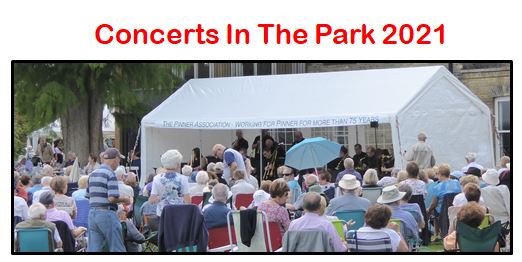
We are hoping to be able to hold our annual “Concerts in The Park” this year.

The concerts are held in Pinner Memorial Park.

We need volunteers to help:-

  • Set up in the morning – this involves moving heavy equipment
  • Steward whilst the concerts are being held.
  • Pack away at the end of the day – this involves moving heavy equipment

If you would like to know more about the stewards role Steward’s Instructions

The concerts may not take place if there are severe weather warnings or COVID restrictions.

Warranty Telephone Scams


Dear Watch Member,

Trading Standards is warning about telephone fraudsters mis-selling insurance for appliances. They claim to be from an insurance company and tell you that the warranty, for example on your fridge, has run out. They say they can renew it for you over the phone. Payment is taken and you may be sent paperwork. However it is a fraud. If your fridge breaks down, there will be no replacement or repair. Next year they will contact you again; what you thought was payment for 3 years was only for one year.

We advise that you don’t buy goods or services over the phone from a cold caller. With no chance to do your own checks, you don’t know if the call is genuine or if the price is a good one. In some cases, it would be cheaper to buy a new item than to buy the warranty.

To help protect yourself from these and similar calls:

For mobile phones, let callers who aren’t in your address book go straight to voicemail.

For landlines, contact your provider and ask for free caller display – if you can see who’s calling and it’s a number you don’t recognise, you will be on your guard immediately.

Contact your phone provider and ask if they offer free call blocking services. BT, Sky and Talk Talk are among providers who offer this service.

Keep your phone on answerphone during the day. Scammers won’t leave you a message. If you’re at home and hear someone genuine leaving a message, you can pick up the phone.

You can buy landline phones with built-in call blockers. Callers must say their name before you speak with them or not. You can also buy call blocking boxes that fit to an existing phone. They range in price, so think about what you need. These are available at all good retailers and online.

For advice on how to protect yourself from different types of fraud, go to www.met.police.uk/advice/advice-and-information/fa/fraud/.

If you need to reply regarding this message, tap on this email address: [email protected]

Regards,
Lee O’Brien
Pinner Safer Neighbourhood Team
Email: [email protected]
Spoof Phone Calls

Dear Watch Member,

A huge increase in cyber-fraud across the world means that we all need to learn how to spot and avoid different types of fraud and cybercrime.

An emerging tactic used by fraudsters is the ‘spoofing’ (cloning) of telephone numbers. A decade ago, anyone receiving a suspicious call could look up the number that was calling them to check its legitimacy. No longer is this sufficient advice.

Fraudsters can now clone numbers used by legitimate organisations, your local bank, HMRC, or even a local police station, to make it look like that organisation’s genuine number is calling you. The fraudster claims to be from that organisation and tries to convince you to do what they say. This means you cannot rely on your Caller ID display to tell you who is calling you.

Protect yourself:

Beware of unexpected phone callers, whomever they claim to be. If in doubt, never divulge personal details over the phone to someone who has called you. The more you say to a fraudster, the more information they gain about you. Don’t be afraid to hang up. Contact friends or family for advice.

Don’t trust your caller ID display. To verify a call, contact the genuine organisation using a number that you have independently researched. Before doing so, ensure the call has ended and the line has cleared, wait five minutes (Some scammers can simulate the sounds of lines clearing to dupe you into dialling while the line is still live), or make the call via a separate phone line where possible.

Institutions such as HMRC, police and banks will never call you to tell you that you / your money is under investigation; nor would they ever ask you to transfer or hand-over money / assets for such a purpose.

Report all scams online to www.actionfraud.police.uk or call 0300 123 2040, giving as much information as possible.

If you need to reply regarding this message, tap on this email address: [email protected]

Regards,
Lee O’Brien
Pinner Safer Neighbourhood Team
Email: [email protected]

Cannon Lane Post Office to Reopen on 8th July.

The Cannon Lane Post Office will reopen in it’s previous location at 88 Cannon Lane at 1pm on the 8th July 2021.

The services offered will include bill payment, cash withdrawals and foreign currency, postage, and home shopping collections and returns.   The opening hours will be 8am to 5.30pm from Monday to Friday, and 8am to 12pm on Saturday.

Pinner Fair – But Not As You Know It!

Just in case you were wondering what happened to of The Showmen’s Guild Pinner Fair this year.  A token stall was set up by its members on the corner of Chapel Lane and Bridge Street.


Let’s hope next year we can see the return of the full fair.

Harrow Council Covid-19 Volunteers Meeting

Harrow Council Covid-19 Volunteers Meeting  – Wednesday 2 June 6-7pm

Harrow Council’s Public Health team is organising a meeting for those who have signed up to be Covid-19 volunteers or those would like to do so. This is the second in a series of meetings for community members and residents who would like to be part of the effort in getting Harrow vaccinated  by providing up to date information and resources to your family, friends and neighbours. If you are leading a community group, please be aware that this is for your members who are linked in to your group.

We are interested in calling upon even more people from Black, Asian and Minority Ethnic backgrounds (including Eastern Europeans) to join us as volunteers. Covid-19 volunteers will be invited to regular monthly meetings with the Public Health team, receive priority up-to-date Covid-19 data, as well as relevant resources to help you communicate with your friends and family.

If you have already signed up to be a volunteer, you will receive an invite for this. Community members who would like to newly sign up as volunteers, please register at https://docs.google.com/forms/d/e/1FAIpQLSdmjqGbYF4hw-Km3hOWvflHrpWTxK9Dfy3J4h_-EEnAN4dVzw/viewform

Harrow Council Covid Community Webinar

Harrow Council Covid Community Webinar –  Wednesday 26 May 6.30pm to 7.30pm

This webinar is open to everyone who lives and works in Harrow and will be an opportunity to hear first-hand about the latest position around Covid cases – including the variant originating from India – in Harrow and how we are responding.

Our panellists will answer any questions you may have about the vaccine rollout, second doses of the vaccines, the protection they offer and the safety of vaccines for young people. There will be a Covid-19 update from Director of Public Health Carole Furlong and addresses from celebrated scientist Dr Donald Palmer, Associate Professor of Immunology at the University of London, and from Dr Genevieve Small, Chair of NHS Harrow Clinical Commissioning Group.

Join the webinar here or phone +44 203 481 5237  or +44 203 481 5240 (Webinar ID: 954 6361 2320, Passcode: 113983)

Pinner Fair

The Pinner Association understands that, as last year and due to the current Covid-19 pandemic restrictions, Pinner Fair will not be held on 2nd June 2021.

However, contrary to the “urban myth” that by not holding the fair the charter granting the right to hold a fair would lapse, this is not the case and therefore Pinner Fair could be held again in 2022 (Covid permitting).

The article below is taken from our magazine The Villager (edition 249, March 2021) and explains why Pinner Fair will continue in future despite the effect of the pandemic curtailing the festivities in 2020 and 2021:

Pinner Fair

Pat Clarke’s scholarly article in The Villager (edition 247, July 2020) about the Royal Charter establishing Pinner Fair in 1336 posed the question whether legislation would be required to abolish it.  This set me thinking.

I remembered that when the Whitsun Bank Holiday was abolished in the 1960’s and replaced by the Spring Bank Holiday, Pinner Fair continued for some years to be held on the Wednesday following Whit Monday, which only occasionally fell on the Spring Bank Holiday.  Particularly since school half-terms invariably include the Bank Holiday, this meant that attendance at the Fair was usually much lower than before the change in the Bank Holiday.  I recalled that, some years later, the date of the Fair was changed to bring it in line with the Bank Holiday, although I could not remember when this happened.

Knowing that legal machinery existed to achieve this change, I was sure there would be a simple answer to Pat Clarke’s question and was prompted to re-read the late Jim Golland’s informative and entertaining book “Fair Enough”*.  Sure enough, this provided the answer.  Attempts to abolish the Fair have been made in the past but always without success.

The Fairs Act 1871 empowered the Home Secretary to abolish a fair if it was thought to be “unnecessary or injurious to the public” or that its abolition would be “for the convenience and advantage of the public”.  Representations accordingly had to be made by the local magistrates.  The passing of the Act precipitated the abolition in 1872 alone of some seventy fairs (including the one at neighbouring Harrow-on-the-Hill, which was alleged to be “to the detriment of the morals of the neighbourhood”).  From 1894, the Act was amended so that representations to the Home Secretary were to be made by local councils rather than by local magistrates.

It was the Fairs Act of 1873 that empowered the Home Secretary to change the date of a fair.  It was presumably pursuant to this Act that the Home Secretary of the day agreed, in 1972, to the change of the date of Pinner Fair from the Wednesday after Whitsun to the Wednesday after the Spring Bank Holiday.  (It had at some previous time been changed from the 24th June and the Charter had originally provided for a three-day fair, from the 23rd to the 25th June.)

The answer to Pat Clarke’s question thus appears to be that Harrow Council would need to persuade the Home Secretary (no doubt in the face of vehement counter-representations by interested groups) that the Fair was “unnecessary or injurious to the public” or that its abolition would be “for the convenience and advantage of the public”.  It could then be abolished pursuant to the Fairs Act 1871 (as amended).  Given the enthusiasm of most Pinner inhabitants for their fair, and its increasing popularity with the public over a much wider area, however, let us hope that this never comes to pass!

Michael Treisman,

Pinner Local History Society.